
Interdental brushes
Interdental brushes have small bristles designed to clean the spaces between your teeth. They come in different sizes, as gaps vary from tooth to tooth. Your dentist or hygienist can help you choose the correct size — the brush should fit comfortably without forcing.
- Gently guide the brush through the gap between your teeth
- Do not force it — if it bends, try a smaller size
- Clean all spaces in a regular pattern so none are missed
When you first start using interdental brushes, your gums may feel tender or bleed slightly. This is common if plaque has built up. With continued daily use, bleeding should reduce as your gums become healthier. If bleeding continues after a few days, speak to your dental team for advice.

Interdental brushes
Interdental brushes have small bristles designed to clean the spaces between your teeth. They come in different sizes, as gaps vary from tooth to tooth. Your dentist or hygienist can help you choose the correct size — the brush should fit comfortably without forcing.
- Gently guide the brush through the gap between your teeth
- Do not force it — if it bends, try a smaller size
- Clean all spaces in a regular pattern so none are missed
When you first start using interdental brushes, your gums may feel tender or bleed slightly. This is common if plaque has built up. With continued daily use, bleeding should reduce as your gums become healthier. If bleeding continues after a few days, speak to your dental team for advice.
Dental floss
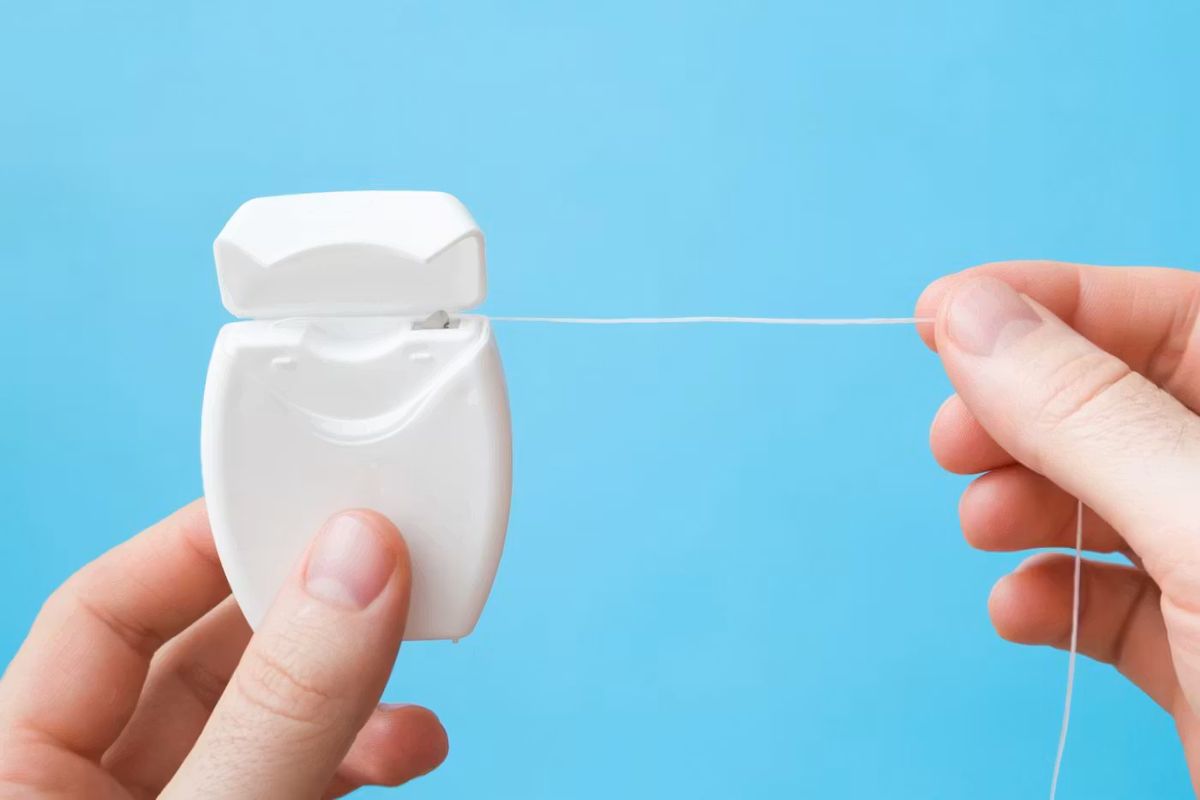
Dental floss is useful where gaps are too small for an interdental brush, or if you prefer it. Some people may also find dental tape or floss holders easier to use.
To floss effectively:
- Use about 45 cm of floss, wrapped around your fingers
- Gently guide the floss between your teeth — don't snap it into the gums
- Curve the floss into a C-shape against the tooth and move it gently up and down
- Clean both sides of each gap before moving on
As with interdental brushes, mild bleeding when you first start flossing is common and usually improves within a few days. Ongoing bleeding should be checked by your dentist or hygienist.

Dental floss
Dental floss is useful where gaps are too small for an interdental brush, or if you prefer it. Some people may also find dental tape or floss holders easier to use.
To floss effectively:
- Use about 45 cm of floss, wrapped around your fingers
- Gently guide the floss between your teeth — don't snap it into the gums
- Curve the floss into a C-shape against the tooth and move it gently up and down
- Clean both sides of each gap before moving on
As with interdental brushes, mild bleeding when you first start flossing is common and usually improves within a few days. Ongoing bleeding should be checked by your dentist or hygienist.
How often should you clean between your teeth?
From around 12 years of age, we recommend cleaning between your teeth once a day, in addition to brushing twice daily. Children under 12 may need help from an adult to floss safely.
Keeping a consistent routine — for example, starting at the same place each time — can help ensure you don't miss any areas.

How often should you clean between your teeth?
From around 12 years of age, we recommend cleaning between your teeth once a day, in addition to brushing twice daily. Children under 12 may need help from an adult to floss safely.
Keeping a consistent routine — for example, starting at the same place each time — can help ensure you don't miss any areas.